
From the 1700s grass was saved for winter feeding by making hay as opposed to the modern practice of silage making. Before machinery was widespread making hay was a very labour and time consuming practice. Preparations would begin in February when manure was applied to hay fields to encourage good growth. The grass would then be cut by hand with a scythe from June with families coming together to help each other out.
After the hay had been cut into swaths, it was left to dry for a couple of weeks and then it was turned by fork for drying on the other side. It was then shaken out and made into lapcocks or cociní, which was a method of rolling the hay in batches and setting on dry bits of ground with the least amount of hay touching the ground as possible. Unless the hay was already very dry, these were left in the fields for a few more days to dry out some more.

Once they were fully dry, the lapcocks were shaken out for a second time and built into proper haystacks between seven and eight feet tall. Súgans, or hayropes were then twisted and drawn over the stacks to secure them; heavy stone weights at the ends of the ropes held them down in high wind. The farmer would also "head" the stacks by raking all the loose hay from the top to tidy it and then he would use a pitchfork to put the loose hay back.
The haystacks stood in the field for a month or so and then it was time to bring it back to the haggard - the traditional storage area for the crops. In most parts of Ireland, horse-drawn haycarts were used, but in very poor regions, one would often see a donkey being led home with a huge burden of hay on its back.
While the advent of machinery on farms made hay making less labour intensive it still depends on good weather for the grass to dry in the field. The majority of farms have changed to silage which can be made in a few hours with fresh grass cut and wrapped instantly. A silage field can be cut and harvested twice in one year while a hay meadow would give only one harvest. This enables farmers to make more use of the field and gives a better product for the livestock. Unfortunately the change from silage making to hay is detrimental to wildlife as it reduces the wildflowers in grass fields when grass is cut earlier also affecting pollinators, and mammals such as the Irish Hare. It also reduces nesting sites for ground nesting birds such as the corncrake which is now extinct in Northern Ireland directly due to the change.
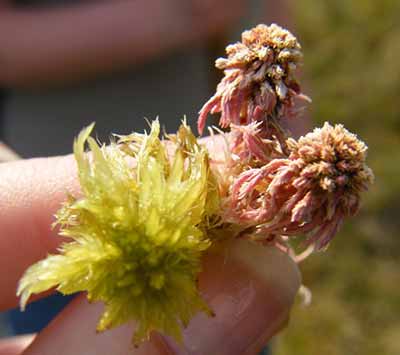
The Sperrins are covered in blanket bog which is a very important peatland habitat. Peat develops in landscapes receiving lots of rain year-round, in places with poor natural drainage. As peat and vegetation grow upward, they eventually lose contact with the groundwater beneath; and receive their water only from rain. On Irish peat bogs, grasses and sedges are abundant in damp places while small shrubs in the heather family grow in drier areas. But soft, springy bog mosses (Sphagnum species) dominate the vegetation: they are important contributors to peat formation in Ireland. Peatlands are a globally important wildlife habitat, they also act as flood defenses and helps reduce climate change by holding carbon in the soil. We now know that uncut and complete peatlands are important for these reasons but in the past they were a valuable fuel source for country people when there was a real lack of other fuel sources.

For centuries and up to the 1980s turf was cut by hand using a turf spade or a sleán. A specialised spade, it was used to slice the turf into rectangular 'sods’. A good turf cutter would have cut hundreds of sods in a day. In very small pockets of the country, this practice is still ongoing and is the least invasive on the bog as a habitat. After the 1980s machine cut turf caused a much higher impact on the bog.
After the turf was cut they were laid out to dry in rows, then followed many visits to the hill for all members of the family to ‘win’ the turf. This meant turning them, footing them (putting into small pyramids to help the drying process), and loading them onto whatever means you had to get them home. Perhaps horse and cart, or manually pulled carts. Later on tractors and trailers were used, these frequently got bogged in the wet ground. Turf cutting by machine still happens today and the old-fashioned ways of drying the turf are still used.
