
In rural Ireland in the 18th and 19th century in each townland there would have been at least one clachan, which was a small cluster of houses with a number of families working together that shared the land around it. These families would have had to survive on what they could grow or rear on this land. We are very lucky in that we still have some good footings (wallsteads) of the clachan houses here at the farm and we can still learn a lot from them even in their depleted state.


Candles have been used for thousands of years and are one of the oldest artificial light sources. They are typically made from wax and have a wick that, when lit, provides a steady, albeit relatively dim, source of light.

Oil lamps, fueled by various oils like olive oil, whale oil, or vegetable oil, were used for centuries. They typically consisted of a container for the oil, a wick, and a chimney to direct the rising smoke away from the flame. Oil lamps provided brighter and longer-lasting light compared to candles.

In earlier times, people used rushlights, which were made from the pith of a rush plant. These were dipped in animal fat or grease and then lit. Rushlights were a simple and inexpensive source of illumination.

Kerosene lamps, which were an immediate predecessor to Tilley lamps, used kerosene (paraffin oil) as a fuel source. They provided a reliable and brighter source of light compared to earlier oil lamps and were widely used in the 19th century.
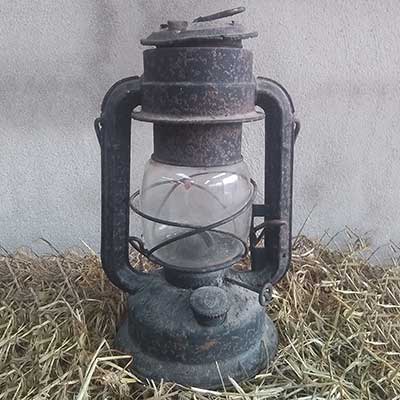
A later and more advanced lamp was the Tilley lamp. This is a type of paraffin (kerosene) lamp that was invented by John Tilley in the early 20th century. This lamp was designed for outdoor and indoor lighting and are known for their durability, brightness, and reliability. They were also easier to use.
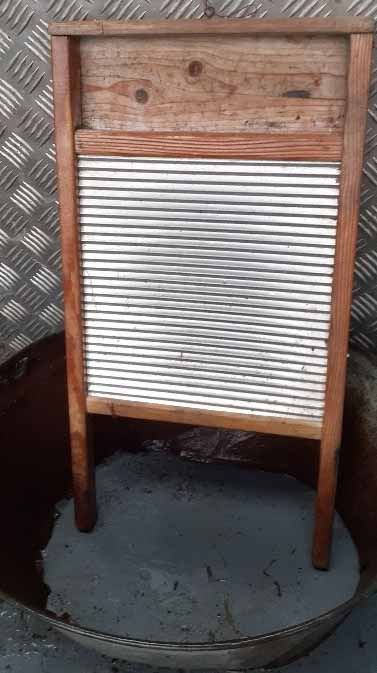
Not really a washing machine but a tool to help the handwashing of clothes. It consists of a flat wooden frame with a series of ridges or corrugated metal surfaces across it. These ridges are what give the washboard its name. The user would rub soapy or detergent-laden clothes against the washboard's ridges to agitate and remove dirt and stains.
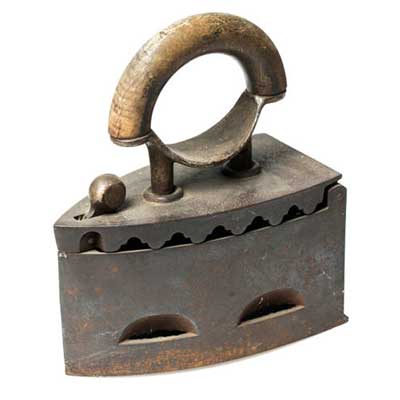
Some of the earliest irons were heated using hot coals or charcoal. These are referred to as charcoal irons. They consisted of a metal container with a handle and a flat, smooth base. The user would fill the container with hot coals or charcoal and then glide the iron over clothing to remove wrinkles. These irons could be quite heavy and required frequent reheating.

Box irons were another early design. These irons had hollow compartments that could be filled with hot materials such as coals, sand, or metal. The heat-retaining material inside the iron would keep it hot for an extended period, reducing the need for constant reheating.
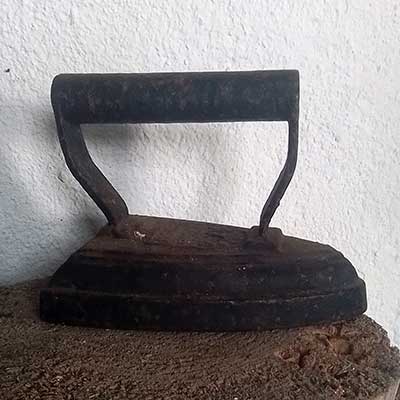
Flat irons, also known as sad irons or smoothing irons, are flat, solid metal irons that were heated on a stove or in an open flame. They came in various sizes, and their handles often featured a distinctive "cooling handle" design to make them easier to grip. Users would heat the iron until it reached the desired temperature and then use it to press clothes.
