
Hedgerows – long rows of bushes, often with trees rising among them – can be seen dividing up our farmland and landscapes. They may be planted or they may be the remnants of ancient wooded areas, but they are mainly used as barriers to prevent livestock from escaping from the fields or to form boundaries between parishes.
With nectar-rich blossom in the spring, insects buzzing in the dense thickets in summer and red berries abound in autumn, hedgerows provide wildlife with a rich larder
Hedgerows on Butterlope Farm are mostly a mix of shrub and tree species such as hawthorn, blackthorn, hazel, ash and rowan, interwoven with climbers like ivy and honeysuckle. Mammals like the harvest mouse, pygmy shrew and hedgehog nest and feed in hedgerows, and bats use them as green ‘commuter routes’ for foraging and roosting. Woodland and farmland birds such as blue tit, great tit, robins, siskins and goldfinches can be found along the hedges to name but a few.
Hedgerows can also prevent soil erosion, capture pollutants such as fertilisers and pesticides running off fields, store carbon to help combat climate change, and provide homes for a great amount of wildlife. They also provide vital links, wildlife corridors, across the countryside for wildlife, helping it to move about freely and keeping populations healthy.
Many hedgerow plants have been used by past generations for food, medicine, fertilisers, dye, and as building materials.
Below are a few of these plants that can be seen on the farm:

Rowan is a common native tree found all over but especially common in the uplands giving rise to its alternative name, mountain ash. It has red berries from August and although they are bitter and poisonous when raw they can be eaten when cooked. A popular way to use them is to make rowan jelly which is basically rowan flavoured apple jelly. It is traditional to use crab apples which also can be found in the wild but you could use cooking apples instead. Rowan jelly is good with cheese and meats. Birds also love them but there are often more than enough for us and them.
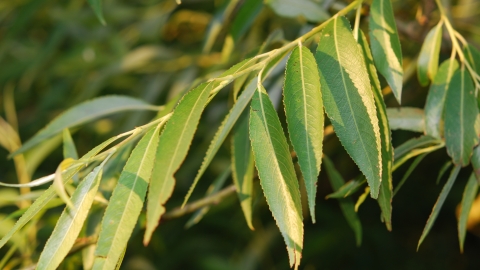
There are over 400 species of willow but crack and goat willow are common species found in our hedgerows. Crack willow (and other types) stems are useful for making baskets, pea trellis, fences and other household items. This has been done for thousands of years and is still a craft used today. Willow was also used as a dye for wool and other animal and plant fibres. Goat willow has high amount of salicylic acid and even 2,500 years ago people were using it for pain relief and fevers. Our modern painkiller asprin was created from it.

Common sorrel or súlags (Irish name) is a very common plant of the hedgerows. It can make a very nice salad plant and has a tangy taste caused by oxyalic acids. Up to the mid 1900s, school children would have picked this and other plants as snacks on the way to school. They may often have had to walk miles to school with very little for breakfast before they left. In spring the young leaves and the flowers of hawthorn were a popular treat. It is important to only eat what an adult has shown you is okay to eat and what has been washed.

Nettles grow everywhere and can be a nuisance, no one wants a nettle sting! At the same time nettles were used for over 100 different things, we know as there is a ‘101 things to do with Nettles’ book. The main uses were as food, once heated the sting (formic acid) is destroyed and the young leaves are full of iron, protein and vitamins. These are things that were in short supply 100 and more years ago, people did not have the access to the wide variety of vegetables that we do now. Nettle soup, nettle tea, and nettle beer were all popular. Nettles can be used in any recipe like spinach. Nettle infused water was also good for your hair and nettles soaked for a few weeks in water made a great fertiliser for crops such as cabbages.

Gorse or whins is an upland plant found in many hedgerows. They can also spread rapidly over farmland and be a nuisance for farmers. They are very prickly and not many birds will use them for nesting but they can be shelter for livestock. Gorse’s yellow flowers were used to dye hen’s eggs at easter, for dying ladies’ hair ‘blonde’ though it was yellowish and also for making drinks and flavouring food. Gorse flowers are still used in herbal medicine for coughs and colds and also for despair.
(Image supplied by Nathan Boyle)
